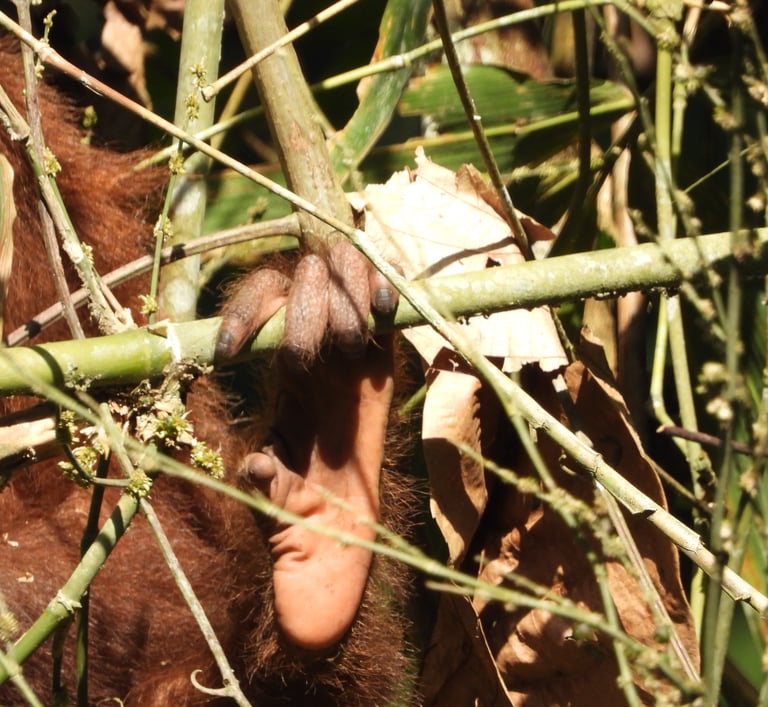
Rare Orangutan Encounters in Deramakot Forest
Explore fascinating insights from a decade of orangutan encounters in the Deramakot Forest Reserve. Discover local beliefs and rare wildlife experiences in Borneo's lush environment.
lost borneo tours
12/10/20253 min read
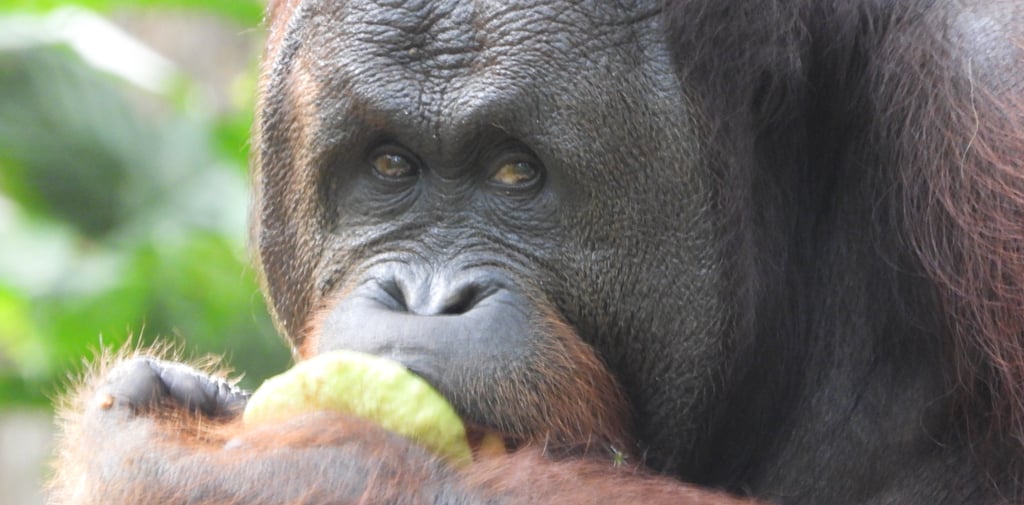

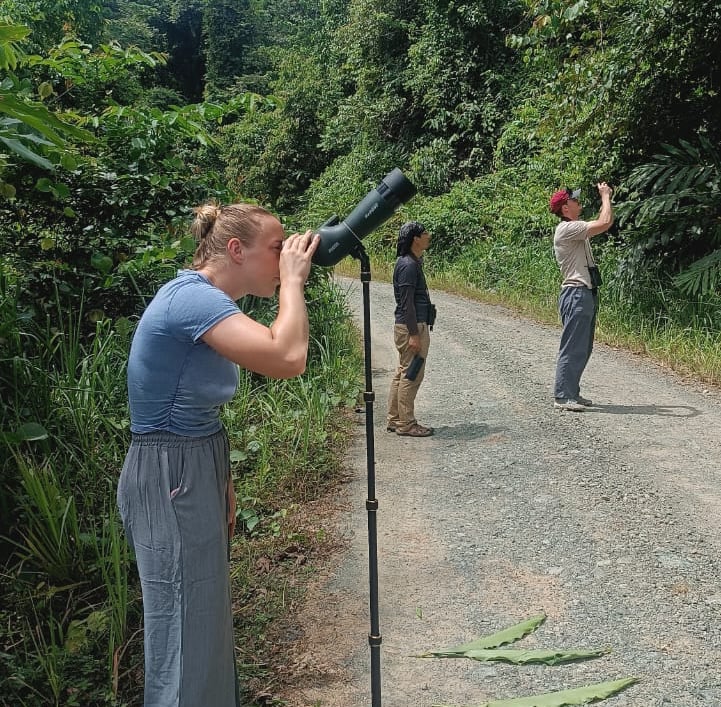
For the past decade, our team in Deramakot Forest Reserve has guided wildlife enthusiasts into one of Borneo’s richest ecosystems — a place where truly wild orangutans still thrive. Along the way, visitors and guides have made new and fascinating behavioural observations that deepen our understanding of these critically endangered great apes.
1. A Surprising Sound: Mother Orangutans That Growl Like Big Cats
One of the most astonishing discoveries was made when our vehicle stopped unknowingly below a mother orangutan hiding with her infant.
Instead of the usual kissing sounds or twig-throwing, our guides heard a deep growl — similar to a big cat.
This new behavior suggests:
A defensive warning to protect her infant
A rare vocalization not commonly recorded in wild orangutans
A sign of growing stress or alarm when humans approach too closely
These findings highlight how little we still know about orangutan communication in the wild.
2. The Night Walker: An Old Male Who Builds Multiple Nests
Another unusual encounter happened around 6:30 PM when visitors observed a large male orangutan preparing his night nest. But when our team returned at 5:30 AM the next morning, the nest was empty.
We waited until 8:00 AM — still no orangutan.
After tracking the area, our guides discovered the male had travelled at night and built another nest roughly 10 minutes away.
This suggests that:
Some adult males navigate and move in low light, a behavior rarely documented
Orangutans may change sleeping nests more frequently than expected
Night movement could be a strategy to avoid predators or human noise
3. A Female Nursing an Infant That Is Not Her Own
One of the most heartwarming findings came from visitors who observed a female orangutan nursing another female’s infant.
This rare behavior may indicate:
Adoption
Temporary infant sharing
Cooperative care in areas with stable orangutan populations
Such observations reinforce the social complexity of these “solitary” great apes.
4. They Don’t Recognise You When You Shave
Another surprising discovery: orangutans rely heavily on facial patterns. Some visitors noted that if they shaved their hair or beard, orangutans didn’t seem to recognise them, even after repeated observations.
This shows how strongly orangutans depend on:
Facial shape
Hair outlines
Color contrast
…to identify individuals — similar to humans.
Local Myths and Cultural Beliefs About Orangutans
In Sabah, the word “Orang Utan” literally means “People of the Jungle.”
Local communities traditionally believed orangutans were once humans who chose to live in the forest and avoid human troubles.
Some old myths say:
Orangutans can talk, but they choose not to
They hide their intelligence from humans
Seeing an orangutan before a journey is a sign of protection
These beliefs reflect the deep respect locals have for these animals.
Why Wild Orangutans Are Different From Captive Ones
Wild orangutans in Deramakot:
Travel long distances daily
Build a new nest almost every night
Use natural tools like leaves for umbrellas or gloves
Show complex decision-making when foraging
In captivity, these natural instincts are limited, reducing the display of their true skills.
Diet, Survival, and Predators
During the non-fruiting season, orangutans adapt by eating:
Young leaves
Bark
Insects
Tree cambium
Wild ginger and ferns
Although adult orangutans have few natural predators, young infants may be taken by clouded leopards or large pythons — another reason mothers are extremely protective.
Decline & Conservation: Why Orangutans Need Our Help
Orangutan populations continue to decline due to:
Habitat loss from logging and agriculture
Forest fragmentation
Hunting and illegal pet trade
Yet Deramakot stands as a successful model of sustainable forest management and is one of the best places in the world to see truly wild orangutans.
Orangutans play a crucial ecological role as seed dispersers, shaping the future structure of Borneo’s rainforest.
How You Can Help: Visit Deramakot Responsibly
Every visitor to Deramakot directly supports:
Sustainable forestry
Wildlife protection
Eco-tourism that gives value to conserving the forest
Local communities and guides who protect wildlife daily
Your visit helps ensure the forest remains a refuge for Borneo’s most intelligent and iconic species.
If seeing a wild orangutan is on your bucket list, there is no place in Borneo quite like Deramakot Forest Reserve. For over a decade, our guests have enjoyed an incredible up to 90% chance of orangutan sightings — one of the highest success rates anywhere in Sabah.
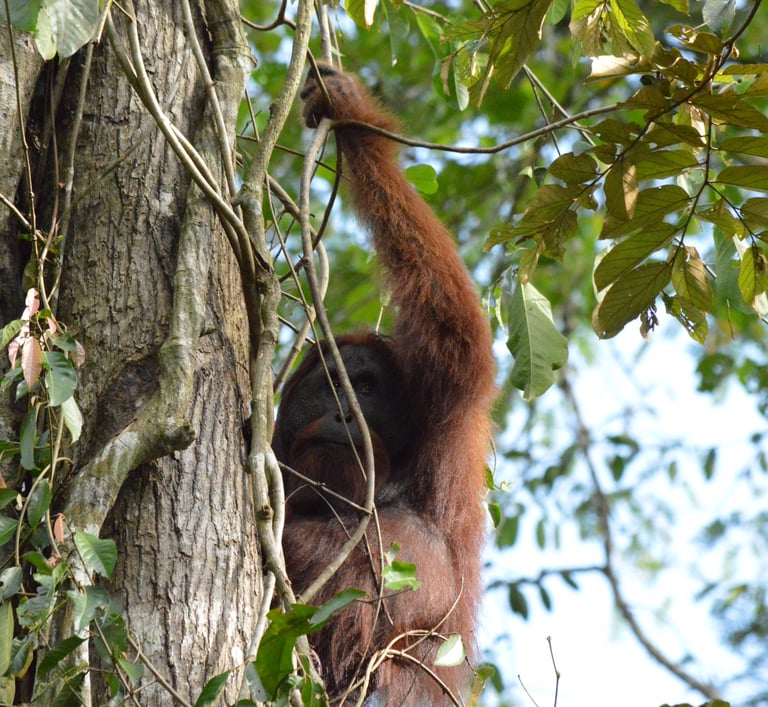
Deramakot is a rare, well-protected rainforest where orangutans live freely, build fresh nests every night, raise their young, and display natural behaviors you will never witness in captivity. Every visit offers something extraordinary: a mother cradling her infant, an old male building his nest at dusk, or a young orangutan feeding high in the canopy.
By choosing Deramakot, you’re not only treating yourself to a once-in-a-lifetime wildlife experience — you’re also helping protect one of the most important orangutan habitats in Borneo. Your visit directly supports conservation, sustainable forestry, and the people who work daily to safeguard this forest.
If you want a truly authentic jungle adventure and the best chance of meeting Borneo’s “People of the Forest,” Deramakot is where the wild still lives.
Book your wildlife journey today — your orangutan story is waiting.