Discover Maroon Langurs in Sabah's Deramakot Forest
Venture into Sabah's Deramakot Forest Reserve and encounter the elusive maroon langur. Witness their fiery fur and playful acrobatics while exploring one of Borneo's most pristine rainforests, a true nature lover's paradise.
Mr Rajiz
4/10/20254 min read
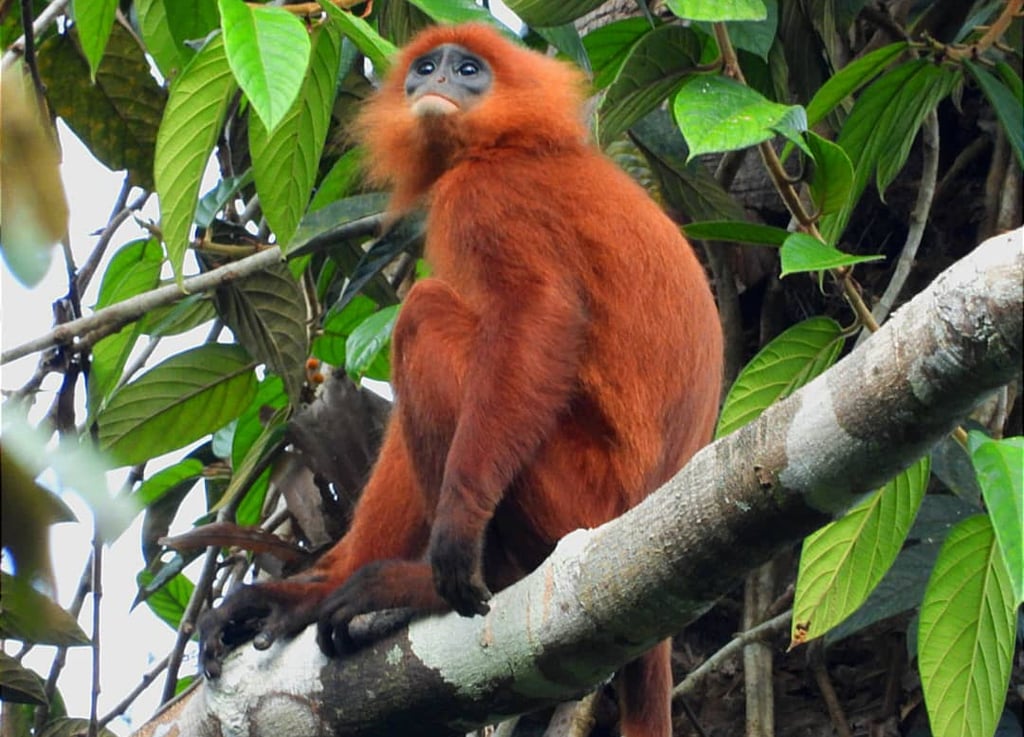
I’ve known the forests of Borneo since I was a child. The jungle was my playground, my classroom, and occasionally, my strictest teacher. I learned to read the subtle signs of wildlife—the distant call of hornbills, the rustle of gibbons high in the canopy, the sway of branches in the wind. Every leaf, shadow, and ripple of water spoke if you knew how to listen. Today, decades later, that knowledge guided me as I led three visitors from the Netherlands—Mike, Koen, and Astrid—on a mission as thrilling as it was precise: photographing the elusive maroon langur during a 3D2N safari at Deramakot.
Day 1: Into the Jungle and the Night Journey
Our adventure began at Telupid restaurant, where we grabbed takeaway dinner before heading into the forest. We departed at 4 pm, ready for the thrill ahead. The road immediately tested us—two hours of muddy oil palm tracks, bouncing us and our cameras violently. Mud splashed all the way to the back of the truck. Apao navigated with precision, keeping the truck steady over slick, uneven ground. Every jolt reminded us that this was no ordinary journey.
By the time we reached the Deramakot gate, the sun had dipped, painting the sky with faint streaks of orange and purple. After a quick dinner, we decided to sit at the back of the truck for the night’s final stretch. Apao alone in the cabin, steering through the forest, while we would enjoy the night sky and sounds of the jungle from the open back. Ever thoughtful, Apao had even fixed a safari bench for us to sit comfortably.
As darkness fell, the stars revealed themselves—the Milky Way spilling across the heavens, constellations cutting patterns into the inky sky. The road grew worse: massive holes, slick mud, and hidden ruts threatened to jolt us at every turn. The truck bounced and pitched, mud splashing over the edges of the bench.
The forest was alive with sound: distant owl calls, insects buzzing and leaves rustling, Rain began to drizzle lightly, the droplets pattering onto the metal truck bed, adding a rhythmic soundtrack to our journey. It lasts for 15 minutes luckily. Every bump and splash became part of the adventure, making laughter unavoidable.
For three hours, we bounced through the night a small price for the sensation of the forest around us. By the time we reached our accommodation, we were exhausted but exhilarated. Sitting at the back of the truck under that endless night sky had been a magical introduction to Deramakot.
Day 2 Morning: Fig Trees and Near Misses
We woke early for our morning drive at 7 am, when maroon langurs are most active until about 10 am to sometimes 11am. The forest was cool and misty, and the first rays of sunlight pierced through the canopy, illuminating patches of green. Apao guided the truck carefully, tires slipping over muddy ruts while keeping us steady.
Soon, we stopped by a massive fig tree, its sprawling branches twisting across the canopy. Calls echoed from above, leaves rustled, and shadows flitted between branches. “Look there,” I whispered. Astrid leaned forward eagerly, her 300mm lens framing the treetops. Koen adjusted his 400mm f/2.8, ready to capture every subtle movement. Mike tried a soft langur call imitation.
After a tense few minutes, movement revealed itself—but it was not the maroon langur we sought. A long-tailed macaque leapt gracefully from branch to branch.
Mike groaned. “All this for a monkey? My 500mm deserves better!”
Astrid laughed. “Be grateful it’s not raining, or you’d be photographing a mud puddle!”
Koen, ever calm, snapped the macaque mid-leap. “Every species counts,” he said, earning playful eye-rolls from the others.
Though we didn’t find the langur that morning, the experience honed our observation skills. Every sound, movement, and shadow was part of the forest’s secret rhythm.
Day 2 Afternoon: Success at Last
After lunch, we returned at 3:30 pm, when the forest cooled and the langurs emerged to feed before dark. Apao expertly navigated the truck, tires slipping over mud but maintaining a steady path.
Then, finally, we saw them—a group of maroon langurs, moving gracefully through the branches. Light filtered through the canopy, illuminating their deep maroon fur. Every shutter click felt sacred.
Astrid’s 300mm captured dramatic silhouettes. Mike’s 500mm isolated intricate details of faces and hands, while Koen’s 400mm f/2.8 captured perfect motion as the troop fed.
The trio’s playful banter continued:
“Move a little, Astrid… you’re blocking the light!” Mike teased.
“I will not! You move your massive lens instead,” she shot back.
Koen shook his head. “You two act like children, yet the wildlife doesn’t care at all.”
The forest demanded respect, but their laughter added warmth to the afternoon, making the moment unforgettable.
Day 3: Farewell Sightings and Journey Back
We checked out early, heading back to Telupid. Midway, we stopped for a quick break and, delightfully, spotted the maroon langur again, calmly feeding above us. Cameras clicked, laughter mingling with awe.
In Telupid town, we celebrated with a big breakfast, recounting highlights from the 3D2N safari. Mike teased Astrid about her silhouette shots, Astrid shot back with witty jabs, and Koen quietly reviewed his photos, occasionally offering dry, humorous commentary.
Finally, the three boarded a long-distance bus to Sandakan airport, and we said our goodbyes. They left with more than photographs—they carried memories, laughter, and the pulse of Deramakot with them.
Reflections on the Safari
This 3D2N adventure wasn’t just about spotting maroon langurs. It was about patience, observation, and shared experience. Muddy roads, slippery trails, night drizzles, and sudden bumps tested us, but the joy of discovery and camaraderie made every challenge worthwhile.
Apao’s skilled driving made every jolt part of the adventure. Sitting at the back of the truck at night, listening to the jungle, feeling rain on our lenses, and watching three photographers respectfully compete brought the forest alive.
Deramakot gave us stories, laughter, and glimpses of a wild, untamed world. As the bus pulled away from Telupid, I knew the forest would remain alive in our memories long after the lenses were packed away.