
Deramakot Forest Reserve: Borneo’s Living Legend of Sustainable Wilderness
Discover what makes Deramakot Forest Reserve different from other wildlife reserves in Borneo — a world-leading sustainable rainforest famed for rare wildlife sightings and night safaris.
lost borneo tours
9/30/20259 min read
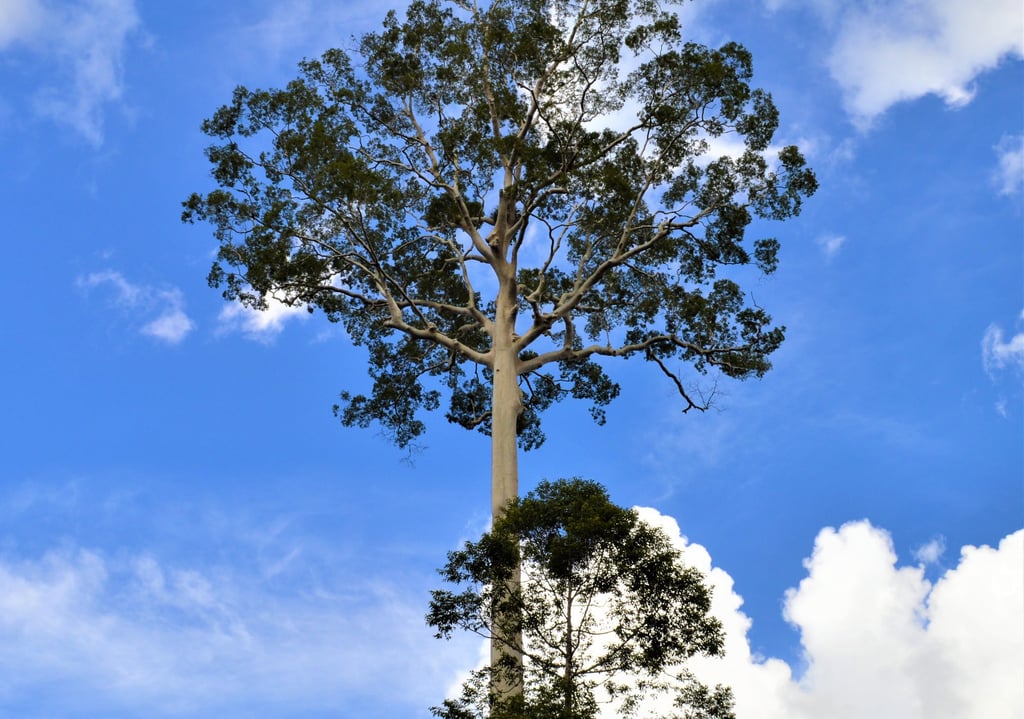
Deramakot Forest Reserve: Borneo’s Living Legend of Sustainable Wilderness
Deep in the emerald heart of Borneo, where the morning mist lingers in cathedral-high canopies and the ancient call of hornbills echoes like forgotten poetry, lies a place unlike any other — the Deramakot Forest Reserve. In a region renowned for biodiversity and primal wilderness, Deramakot stands apart. Not merely a sanctuary of wildlife, it is a pulsating testament to visionary forest stewardship, wild coexistence, and adventure unbounded.
Here, in this expansive 55,507-hectare tapestry of lowland mixed Dipterocarp rainforest in Sabah, Malaysia, lies a landscape of paradox — a working forest that thrives ecologically, a logging concession that champions biodiversity, and a wilderness that welcomes explorers to witness nature both fragile and fierce.
This blog unfolds the story, ecology, uniqueness, and transformative legacy of Deramakot — and reveals why this singular reserve should be on every adventurer’s bucket list and every conservationist’s radar.
Table of Contents
The Essence of Deramakot: A Forest Like No Other
1.1. Geography & Scope
1.2. The Spine of a Tropical Landscape
1.3. A Mosaic of LifeA New Paradigm: Sustainable Forest Management Meets Wildlife Preservation
2.1. Certified Stewardship Since 1997
2.2. What Sustainable Forest Management Really Means
2.3. A Living Laboratory for the WorldBiodiversity That Dances Between Trees
3.1. Mammalian Marvels
3.2. Avian Radiance
3.3. Forest Floor Wonders
3.4. Endemic and Threatened Species Not Found ElsewhereComparisons: How Deramakot Breaks the Bornean Mold
4.1. Deramakot vs. Danum Valley
4.2. Deramakot vs. Kinabatangan
4.3. Deramakot vs. Tabin Wildlife ReserveAdventures Beyond the Ordinary
5.1. Night Safaris That Stir the Soul
5.2. Hotspots for Wildlife Sightings
5.3. The Quiet Majesty of Forest TrailsEco-Tourism, Community, and Conservation in Tandem
6.1. People and Forest in Harmony
6.2. Social Forestry and Local Empowerment
6.3. Research, Education, and Global ImpactWhy Deramakot Matters for the Planet
7.1. Carbon, Climate, and Forest Health
7.2. Habitat Connectivity
7.3. A Template for the FuturePlanning the Journey: Practical Tips for Explorers
8.1. Best Time to Visit
8.2. Tour Structures and Wildlife Safaris
8.3. Packing for the WildConclusion: The Heartbeat of Borneo’s Wildest Dreams
1. The Essence of Deramakot: A Forest Like No Other
In the beginning is the forest — not an abstract canopy in a textbook, but a breathing, humming, labyrinthine world where every leaf shimmer whispers a story of ancient persistence.
1.1. Geography & Scope
Nestled in east-central Sabah, the Deramakot Forest Reserve spans a vast 55,507 hectares of lowland mixed Dipterocarp forest, formed over millennia and shaped by rivers, ridges, and the slow passage of time.
Unlike many reserves that prioritize either tourism or strict conservation, Deramakot embodies multiplicity: part conservation area, part sustainable timber production, part community forestry. This blend creates a living mosaic — a dynamic wilderness shaped by ecological rhythms rather than rigid fences.
1.2. The Spine of a Tropical Landscape
The forest’s topography is a symphony of undulating hills, shadow-draped valleys, meandering streams, and hidden watersheds. It is the kind of place where the sky — carved through the canopy by sunlight — paints light on the forest floor like brushstrokes across an untouched canvas.
Here, climate, soil, and evolution have conspired to craft a biodiverse tapestry unmatched in much of Southeast Asia. Winds carry the laughter of gibbons across ridges; rivers nurture life from root to crown; and in the quiet hum of insects at dusk, one can feel the pulse of an ecosystem both ancient and awake.
1.3. A Mosaic of Life
Deramakot is not a singular ecosystem — it is many intertwined. The heart of the reserve may host ancient Dipterocarp giants, while adjacent areas are in various stages of natural regeneration from selective logging. This heterogeneity — a patchwork of forests at different growth stages — supports a flourish of species, each drawn to specific niches in the forest’s tapestry.
This complexity, born of intentional forest management, underpins Deramakot’s ecological success — and foreshadows why it has captivated scientists, conservationists, and adventurers alike.
2. A New Paradigm: Sustainable Forest Management Meets Wildlife Preservation
At first glance, the notion of logging and conservation coexisting might seem like contradiction. Yet Deramakot defies this assumption — not merely surviving, but flourishing in the harmony of dual purpose.
2.1. Certified Stewardship Since 1997
In 1997, Deramakot became the first tropical forest in the world certified under the Forest Stewardship Council® (FSC) — a distinction that has since made it the longest-certified tropical rainforest on the planet.
After a brief lapse due to the COVID-19 pandemic, the reserve successfully regained its FSC certification in 2024 — a testament to continuous commitment to sustainable forest practices.
This certification isn’t a trophy; it is proof — from soil to canopy, from wildlife corridors to indigenous stewardship — that economic use and conservation can coexist without compromise.
2.2. What Sustainable Forest Management Really Means
At its core, sustainable forest management (SFM) in Deramakot embodies ecological sensitivity paired with scientific rigor:
Reduced Impact Logging (RIL): Instead of clearcutting, careful harvesting techniques minimize damage to surrounding trees and soil, preserving forest structure.
Long Rotation Cycles: Forest compartments are logged on extended timelines, allowing deep recovery and maintaining ecological functions.
Biodiversity-Sensitive Planning: High conservation value areas — streams, ridges, steep slopes — are protected from logging to maintain habitat integrity.
Socio-Environmental Balance: Local communities participate in forest restoration and management, forging both ecological stewardship and economic resilience.
This holistic approach over decades has transformed Deramakot into a proof of concept — a model forest that the world watches, studies, and strives to emulate.
2.3. A Living Laboratory for the World
Because Deramakot marries complex forest ecology with sustainable commercial practice, it has become a research crucible. Scientists study carbon sequestration, wildlife behavior in managed forests, and comparative biodiversity — yielding insights that ripple across tropical forest management globally.
Unlike typical reserves where human footprint is sharply limited, Deramakot shows that when humans act as mindful participants, forests can regenerate, ecosystems can thrive, and wildlife can flourish — side by side with responsible human use.
3. Biodiversity That Dances Between Trees
The true heartbeat of Deramakot is not its trees, although they are ancient and monumental — it is the myriad lives these forests nourish.
3.1. Mammalian Marvels
Deramakot hosts approximately 75% of all mammal species recorded in Sabah, a staggering measure of its ecological richness.
Among the giants and ghosts of the night:
Bornean Pygmy Elephants leisurely traverse shaded paths.
Orangutans swing at dawn through lofty crowns.
Clouded Leopards — elusive, majestic — prowl like shadows stitched to the forest.
Banteng (Wild Cattle) graze in early light.
These are not zoo-caged encounters; they are wild, unpredictable, and spellbinding meetings between human witness and untamed existence.
3.2. Avian Radiance
Birdwatchers find Deramakot a cornucopia of feathered wonders:
Hornbills cavort overhead, their casque calls echoing like ancient trumpets.
Over 240 species of birds make this forest their home, from raptors to tiny canopy songsters.
The air here is thick with song — each dawn a fresh concerto in the cycles of life and flight.
3.3. Forest Floor Wonders
Below the canopy, life thrives in subtler motion:
Civets and slow lorises wander beneath lanterned leaves.
Leopard cats prowl along moonlit trails.
The shy Malay sun bear forages at dusk.
This multi-layered web of life pulses at every level — from underbrush to treetops.
3.4. Endemic and Threatened Species Not Found Elsewhere
Few places can rival Deramakot in rarity density. The reserve plays host to species that are either endemic to Borneo or critically at risk, making each sighting a privilege and a reminder of why conservation must endure.
4. How Deramakot Breaks the Bornean Mold
Borneo is blessed with extraordinary wilderness. Names like Danum Valley Conservation Area, Kinabatangan River, and Tabin Wildlife Reserve rise quickly in conservation conversations. Each is exceptional in its own right.
But Deramakot is something else entirely.
It does not compete — it redefines.
4.1 Deramakot vs. Danum Valley: Pristine vs. Progressive
Danum Valley is often described as “untouched.” It is a sanctuary of primary rainforest where strict protection defines the landscape. Towering trees, ancient forest corridors, and controlled visitor numbers create a feeling of sacred stillness.
Deramakot, however, tells a different story.
Where Danum represents preservation without use, Deramakot demonstrates preservation through responsible use.
Key Differences:
Forest Structure
Danum Valley: Primarily pristine primary forest.
Deramakot: A mosaic of primary forest, regenerating forest, and sustainably managed compartments.
This mosaic is not a flaw. It is an ecological advantage. Regenerating forests often produce fruiting trees and pioneer species that attract herbivores — which in turn attract predators.
The result? Higher mammal sighting probability in certain areas.
Wildlife Encounters
Danum offers rare and powerful wildlife experiences — especially orangutans and birds.
Deramakot, however, has earned a global reputation for night mammal sightings, particularly:
Clouded leopard
Marbled cat
Leopard cat
Civets in abundance
For wildlife photographers and mammal enthusiasts, Deramakot frequently delivers what other reserves only promise.
4.2 Deramakot vs. Kinabatangan: River Safari vs. Deep Forest Immersion
The Kinabatangan River is legendary for its river-based wildlife cruises. Elephants crossing riverbanks. Proboscis monkeys silhouetted against sunsets. Crocodiles drifting in silence.
Kinabatangan is dramatic and accessible.
Deramakot is immersive and raw.
Accessibility vs. Remoteness
Kinabatangan: Easily reached by road; wildlife concentrated along riverbanks.
Deramakot: Remote interior forest; wildlife dispersed across a vast landscape.
This remoteness filters tourism. There are no riverside lodges with cocktail decks. No crowds of boats converging on a herd.
Instead, there are long forest roads under moonlight. Silence between sightings. The electric tension of scanning treelines for glowing eyes.
Deramakot is not curated. It is encountered.
4.3 Deramakot vs. Tabin: Sanctuary vs. Landscape-Scale Ecosystem
Tabin Wildlife Reserve is known for mud volcanoes, rhinos (historically), and concentrated wildlife zones.
Tabin is structured for conservation tourism.
Deramakot is landscape-scale.
At over 55,000 hectares, it connects habitats across ecological gradients. It supports wide-ranging species like:
Bornean pygmy elephant
Sunda clouded leopard
Banteng
These animals require large territories — and Deramakot provides continuity.
It is not just a reserve. It is a living system.
5. Adventures Beyond the Ordinary
If Deramakot has a signature, it is this: night.
When darkness descends, the forest awakens in ways few travelers ever witness.
5.1 Night Safaris That Stir the Soul
Most wildlife reserves limit night access. Deramakot embraces it responsibly.
Night drives along its forestry roads reveal a dimension of Borneo rarely seen:
Civets gliding between shadows
Slow lorises clinging to branches
Leopard cats frozen mid-prowl
The possibility — always — of a clouded leopard crossing the beam
Few places in Southeast Asia offer this frequency of nocturnal mammal encounters.
The experience is not theatrical. It is patient, scanning, silent anticipation. It demands attention. It rewards stillness.
For wildlife photographers, Deramakot is often considered one of the best locations in Asia for wild cat sightings.
5.2 Wildlife Hotspots and Ecological Corridors
Because Deramakot is actively managed, forest roads create access into varied habitats:
Secondary growth edges
Old logging compartments now regenerating
Dense primary forest corridors
Salt licks and open clearings
This variation increases ecological edge zones — areas where biodiversity thrives.
Edges attract prey.
Prey attracts predators.
It is a subtle but powerful ecological principle — and Deramakot exemplifies it.
5.3 The Quiet Majesty of Forest Trails
Daytime reveals a different rhythm.
Bird calls ricochet between trees. Gibbons call across valleys. Sunlight filters in cathedral shafts.
Trail walk here feels intimate. Less manicured than other reserves, more exploratory. It feels like stepping into a forest that is actively becoming itself again.
There is humility in walking here — witnessing regeneration rather than perfection.
6. Eco-Tourism, Community, and Conservation in Tandem
What makes Deramakot truly different is not only wildlife.
It is governance.
6.1 A Forest Managed by the Sabah Forestry Department
Unlike privately operated reserves, Deramakot is managed by the Sabah Forestry Department.
This matters.
Management decisions are rooted in long-term forest policy, biodiversity research, and certification standards — not short-term tourism trends.
This alignment between government stewardship and global certification ensures stability and accountability.
6.2 Social Forestry and Community Involvement
Local communities are integrated into forest management through:
Employment opportunities
Monitoring programs
Restoration work
Tourism partnerships
The forest is not isolated from people. It includes them responsibly.
This model reduces illegal logging pressure and fosters shared guardianship.
6.3 Research and Global Influence
Deramakot has become a case study in sustainable tropical forestry.
Researchers examine:
Carbon sequestration rates
Biodiversity resilience in logged forests
Predator-prey dynamics
Forest regeneration cycles
Its data contributes to global climate and forestry policy conversations.
Deramakot is not just surviving — it is teaching.
7. Why Deramakot Matters for the Planet
Beyond tourism, beyond photography, beyond adventure — Deramakot matters ecologically.
7.1 Carbon Storage and Climate Regulation
Tropical forests are among the planet’s most important carbon sinks.
By maintaining continuous canopy cover and implementing reduced impact logging, Deramakot sustains carbon storage while allowing regulated economic use.
This balance offers a blueprint for tropical nations navigating development pressures.
7.2 Habitat Connectivity
Deramakot forms part of a broader forest landscape in Sabah’s interior.
Large mammals require corridors — uninterrupted stretches of forest to migrate, forage, and breed.
Fragmentation is the enemy of biodiversity.
Deramakot resists fragmentation.
7.3 A Model for the Future of Tropical Forests
The future of conservation cannot rely solely on untouched reserves.
Globally, many forests are production landscapes. Deramakot proves that these landscapes do not need to be ecological casualties.
It challenges a binary narrative:
Conservation vs. Use.
Instead, it proposes:
Conservation through Responsible Use.
8. Planning a Visit to Deramakot Forest Reserve
For travelers, preparation shapes experience.
8.1 Best Time to Visit
Wildlife sightings are possible year-round.
However:
Drier months often improve road conditions.
Transitional seasons (wet) can stimulate animal movement especially cats.
Night safaris remain the highlight regardless of season.
8.2 Who Should Visit?
Deramakot is ideal for:
Wildlife photographers
Mammal enthusiasts
Conservation-minded travelers
Adventurers seeking fewer crowds
It is less suited for luxury-focused tourism or travelers seeking short, easy wildlife stops.
This is a place for patience.
8.3 What to Expect Logistically
Access typically involves overland travel from Sandakan or central Sabah towns. Roads are forestry roads — functional, sometimes rough, always immersive.
Accommodation is simple but comfortable.
Expect:
Early mornings
Late nights
Limited Wi-Fi
Immersive forest soundscapes
It is not polished. It is authentic.
9. Conclusion: The Beating Heart of Regenerative Wilderness
In the grand theatre of Borneo’s wilderness, Deramakot does not shout.
It whispers — but with conviction.
It proves that forests can be logged without being lost. That biodiversity can persist beyond purity myths. That conservation is not only about fencing off land, but about learning to live with it intelligently.
Where other reserves preserve the past, Deramakot experiments with the future.
And perhaps that is what makes it truly different.
In the glow of a spotlight catching the emerald eyes of a leopard cat…
In the distant rumble of elephants moving through secondary growth…
In the silent mathematics of carbon stored in towering dipterocarps…
Deramakot stands not as a compromise.
But as a possibility.